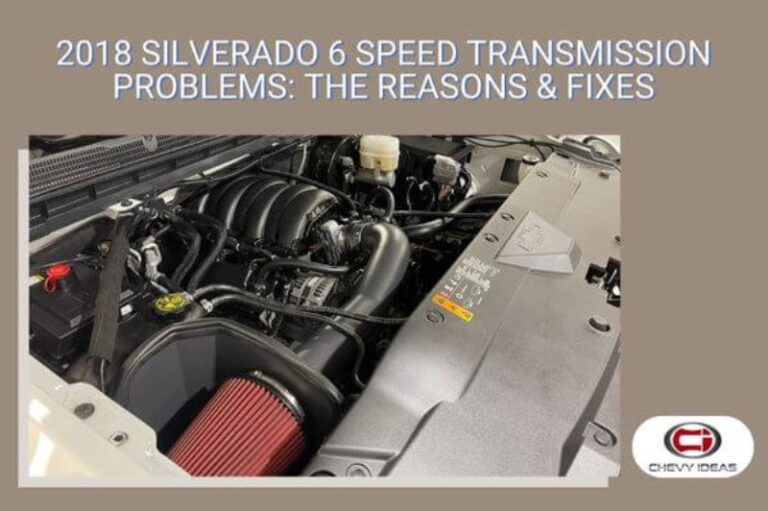
The 2018 Silverado is a popular pickup truck, but it has been plagued by transmission problems. These problems can range from minor annoyances to major failures that can leave you stranded on the side of the road.
Symptoms of 2018 Silverado 6 Speed Transmission Problems
There are a number of symptoms that can indicate a problem with the 6-speed transmission in the 2018 Silverado. These symptoms include:
- Harsh or erratic shifting: The transmission may shift abruptly or jerkily, or it may refuse to shift gears altogether.
- Slipping gears: The transmission may slip out of gear, especially when under load.
- High transmission temperatures: The transmission may overheat, causing the fluid to break down and the transmission to fail.
- Noises: The transmission may make a whining, grinding, or clunking noise.
- Leaking fluid: The transmission may leak fluid, which can cause it to overheat and fail.
Causes of 2018 Silverado 6 Speed Transmission Problems
There are a number of factors that can contribute to transmission problems in the 2018 Silverado. These factors include:
- Defective parts: Some 2018 Silverados were equipped with defective transmission parts, such as faulty valve bodies or solenoids.
- Software problems: The transmission control module (TCM) may contain software bugs that can cause shifting problems.
- Overheating: The transmission may overheat if it is subjected to excessive loads or if the cooling system fails.
- Lack of maintenance: Failure to regularly change the transmission fluid and filter can lead to transmission problems.
How to Fix 2018 Silverado 6 Speed Transmission Problems
If you are experiencing transmission problems with your 2018 Silverado, there are a few things you can do to fix the problem. These steps include:
- Check the transmission fluid level: The transmission fluid level should be checked regularly and topped off as needed.
- Change the transmission fluid and filter: The transmission fluid and filter should be changed every 30,000 to 50,000 miles.
- Have the transmission inspected by a qualified mechanic: If you are experiencing transmission problems, it is important to have the transmission inspected by a qualified mechanic. The mechanic will be able to diagnose the problem and recommend the necessary repairs.
Transmission problems can be a major inconvenience, but they can also be dangerous. If you are experiencing transmission problems with your 2018 Silverado, it is important to have the problem fixed as soon as possible to avoid further damage or injury.
Does the 2018 Silverado 6-speed transmission have problems?
The 2018 Silverado 6-speed transmission has been known to have some issues, including elevated transmission temperatures, worn valve bodies, and malfunctioning Transmission Electronic Hydraulic Control Modules (TEHCMs).
What are the symptoms of 2018 Silverado 6-speed transmission problems?
The symptoms of 2018 Silverado 6-speed transmission problems can include harsh or erratic shifts, difficulty shifting gears, and transmission slipping.
What are the causes of 2018 Silverado 6-speed transmission problems?
The causes of 2018 Silverado 6-speed transmission problems can include elevated transmission temperatures, worn valve bodies, and malfunctioning Transmission Electronic Hydraulic Control Modules (TEHCMs).
How can I fix 2018 Silverado 6-speed transmission problems?
Some potential fixes for 2018 Silverado 6-speed transmission problems include checking the fluid level, removing and inverting the cooler bypass valve, and checking the MAF and TPS sensors. In some cases, it may be necessary to replace the valve body or TEHCM.
| Characteristic | Advice/Key Point |
|---|---|
| Elevated transmission temperatures | Maintain temperatures below 170°F to prevent problems. |
| Worn valve bodies | Can cause harsh or erratic shifts. |
| Adaptive learning strategies | Adjust line pressure based on perceived component wear, potentially leading to shifting issues. |
| Malfunctioning TEHCM | May be responsible for transmission problems. |
| Intermittent faults in pressure switches | Can result in hard shifts. |
| Troubleshooting Steps: | |
| – Check fluid level | Ensure it’s correct at operating temperature. |
| – Remove and invert cooler bypass valve | Allows continuous fluid flow and helps regulate temperatures. |
| – Check MAF and TPS sensors | Faults in these sensors can affect transmission shifting. |
| Possible Solutions: | |
| – Valve body or TEHCM replacement | May be necessary if symptoms persist despite controlling temperatures. |
| – Cooler bypass valve replacement | Address potential sticking issues that cause temperature spikes. |
| – Sensor replacement | Replace faulty MAF or TPS sensors to resolve transmission shifting problems. |
| Additional Information: | |
| – Avoid temperatures exceeding 180°F | To prevent transmission damage. |
| – Intermittent pressure switch faults | Affect pressure regulation and often cause harsh shifts. |